


Tonsillectomy (taking out your tonsils) because of repeated infections
Quick Facts
- You must have at least the following number of episodes of tonsillitis to be considered for tonsillectomy:
- seven episodes in first year
- five episodes per year in two years
- three infections per year for three years.
- You will need two weeks off work and social activities after a tonsillectomy
- Tonsillectomy is painful
- In adults, the risk of bleeding after surgery is one in five.
- One in 100 adults may need a second operation to stop bleeding. You may need a blood transfusion.
What are tonsils?
Tonsils are small glands that sit at the back of your throat. You have two tonsils, one on the left side and one on the right side.
Normal tonsils
Each tonsil is about the size of a grape. Tonsils are part of the body’s system for fighting infection and are important when you are a child. As you get older the tonsils become less important in fighting germs and usually shrink. Your body can still fight infections without your tonsils.

Picture 1: normal tonsils
What is tonsillitis?
Tonsillitis is an infection or inflammation of the tonsils. Tonsillitis is caused by a viral or bacterial infection in the throat.
How might tonsillitis affect me?
Tonsillitis causes a fever, sore throat, smelly breath, difficulty swallowing, painful swallowing and tender glands in the neck. When your tonsils are swollen, you may breathe through your mouth, snore and have pauses in breathing while you are sleeping. Tonsillitis can make you feel very tired and unwell. These symptoms usually get better after three to four days but can last up to two weeks.
Tonsillitis is very common and most people can be treated with painkillers and rest. Some patients may also need antibiotics.
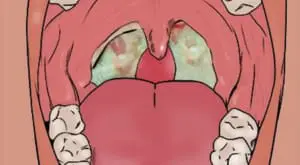
When you have tonsillitis, the tonsils usually look red and swollen. They may have white spots or pus that covers them partially or completely.

Picture 2: infected tonsils
Sore throats caused by viruses are very common and most people can be treated with painkillers and rest. But if you have tonsillitis caused by a bacterial infection, you may also need antibiotics.
Sometimes a collection of pus can develop next to the infected tonsil. This is called a quinsy, and can cause a very severe sore throat, high temperature, difficulty breathing and difficulty opening your mouth.
If you have a quinsy, this will need to be drained, usually under local anaesthetic, and you will need to take painkillers and antibiotics.
Why has a tonsillectomy been recommended for me?
The operation to remove the tonsils is called a tonsillectomy. Tonsillectomy is one of the most common operations performed in the UK.
You have had the minimum number of episodes of severe tonsillitis or quinsy for the benefit of the operation (preventing further severe episodes) to outweigh the common risks (pain, bleeding and infection).
Most people do not get lots of episodes every year or lots of severe episodes. Tonsillectomy is recommended for the small number of patients who have lots of severe episodes of tonsillitis.
What are the benefits of having the operation?
The benefit of the operation is to prevent further episodes of bacterial tonsillitis. You may still get sore throats in the future, but you should get them less often and they should be less severe.
It is important to remember that mild sore throats are not caused by an infection of the tonsils and removing your tonsils will not prevent this type of sore throat.
What are the alternatives to surgery?
Tonsillitis can be treated with painkillers and antibiotics. Gargling with salt water can help to reduce the severity and number of episodes of tonsillitis.
Is there an alternative operation to tonsillectomy?
Tonsil tissue is sometimes removed using a technique called tonsillotomy. This technique may cause less pain and bleeding than a tonsillectomy, but it does not remove all of the tonsil tissue so there is a higher chance that it will grow back and cause tonsillitis. Tonsillotomy is usually used when tonsil tissue needs to be removed for reasons other than infection.
What if I decide not to have surgery?
You may continue to get severe sore throats and infections. Sometimes a severe infection can spread to the space next to the tonsil and cause an abscess (a collection of pus) called a quinsy. Sometimes the infection can spread to the glands in the neck and cause an abscess.
What if I decide not to have any treatment (including medication)?
You will continue to have symptoms. You may develop a complication of infection if the pus spreads to the neck. Very rarely, the bacteria can be carried in your blood and affect your heart and joints. This is called rheumatic fever and can develop two to four weeks after a sore throat. You may develop joint and chest pain, and you may feel breathless, tired, and as though your heart is racing.
What are the risks of tonsillectomy?
Tonsillectomy, like any other operation, has certain risks. The main ones to know about are bleeding and infection.
The complications and risks of any surgery are grouped into the following categories.

Bleeding can happen at any point in the two weeks after your operation. You may spit out small amounts of bloodstained saliva for the first day after your operation – this is normal.
About one in every five adults will need to stay in hospital for observation because of bleeding. One in 100 people will need a second operation to stop the bleeding. Bleeding can start very quickly, and you may need a blood transfusion if you lose a lot of blood.
Go straight to your nearest A&E department if you have any of the following:
- Spitting out bright red blood or blood clots
- Difficulty breathing
- Bright red, black or brown vomit
You could be bleeding and must have your throat examined.
- Infection in the throat can happen in the two weeks after the operation. Fever (a high temperature of 38oC/100oF or above) is common within the first 24 to 48 hours after tonsillectomy and will affect up to half of patients. You should not need antibiotics for a fever that quickly goes back to normal, but if the fever does not go down, it could be a sign of an infection. If you have a high temperature, you should see your GP or go to the nearest A&E department.
- Swelling of the uvula (the dangly bit at the back of your throat) can develop after the operation. This can feel like you have something stuck at the back of the throat, but should get better within a few days.
- Damage to teeth, lips and gums. The instrument used to keep your mouth open during the operation sits on the teeth. Please let your surgeon know if you have any loose, capped or crowned teeth.
- Altered taste. You may find that food and drink taste different after your operation. This usually gets better without any treatment.
- Complications of general anaesthetic. The operation is performed under general anaesthetic. Complications include blood clots in the legs (deep vein thrombosis) or lungs (pulmonary embolism), heart attack, chest infection, stroke and death. The pre-assessment team and anaesthetist will explain what happens during a general anaesthetic, and the associated risks that are relevant to you. This link summarises the common events and risks of a general anaesthetic.