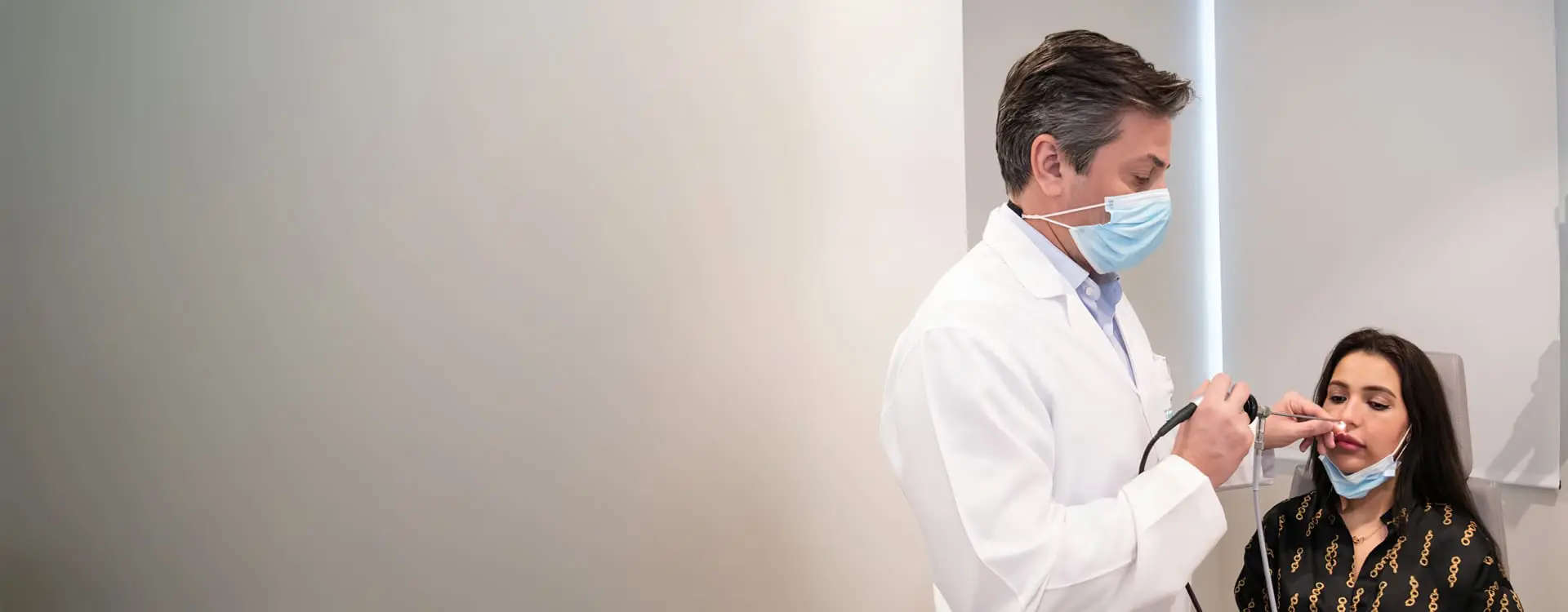




What Is Balloon Sinuplasty?
Balloon sinuplasty is a minimally invasive procedure used to widen selected blocked sinus openings. A small balloon catheter is guided into the affected sinus opening, gently inflated, and then removed to improve natural drainage while preserving the surrounding tissue.
The procedure is suitable for selected sinus conditions, particularly certain cases affecting the frontal or maxillary sinuses. A detailed assessment is required to determine whether balloon sinuplasty or another sinus procedure is more appropriate.
Who Is a Candidate for Balloon Sinuplasty?
- Chronic rhinosinusitis that has not improved adequately with medical treatment.
- Persistent nasal congestion caused by narrowed sinus openings.
- Recurrent sinus infections despite appropriate medical management.
- Frontal or maxillary sinus disease suitable for balloon dilation.
- Symptoms affecting breathing, sleep, or daily activities.
- Imaging findings confirming blockage in a sinus that can be treated using balloon sinuplasty.
Benefits of Balloon Sinuplasty
- Improved drainage and ventilation of treated sinuses.
- Relief from persistent nasal congestion.
- Reduced facial pressure associated with chronic sinusitis.
- Minimal tissue disruption.
- No external incisions.
- Less postoperative discomfort for some patients compared with more extensive sinus surgery.
- A shorter recovery period for appropriately selected patients.
- Long-term symptom improvement in selected cases.
Alternatives to Balloon Sinuplasty
Treatment alternatives depend on the underlying sinus condition and may include medication, saline nasal irrigation, allergy management, or Functional Endoscopic Sinus Surgery (FESS).
Deciding Whether Balloon Sinuplasty Is Right for You
The decision to undergo balloon sinuplasty is made after reviewing your symptoms, previous medical treatment, nasal examination, and imaging findings. Dr. Tamer Fawzy will explain the expected benefits, limitations, alternatives, and potential risks before you decide whether to proceed.
Preparing for Balloon Sinuplasty
Before the procedure, Dr. Tamer Fawzy will review your medical history, current medications, examination findings, and imaging studies. The anaesthesia team may also assess whether any preoperative tests are required.
You will receive personalized instructions about eating, drinking, medications, and arrival time. These instructions should be followed carefully to help the procedure proceed safely.
How Is Balloon Sinuplasty Performed?
Balloon sinuplasty is usually performed under anaesthesia. A thin guidewire and balloon catheter are passed through the nostril and carefully positioned within the selected sinus opening.
The balloon is gently inflated to widen the narrowed opening, then deflated and removed. The sinus may also be rinsed with sterile saline. The procedure is performed through the nostrils without external incisions.
Recovery After Balloon Sinuplasty
Recovery is usually straightforward, although it varies between patients. Temporary nasal congestion, mild swelling, pressure, or light blood-stained discharge may occur during the early recovery period.
Most Patients Can Expect:
- Mild congestion during the first few days.
- Light bleeding or blood-stained mucus during early recovery.
- Gradual improvement as swelling decreases.
- A return to light activities according to individual recovery and medical advice.
- Continued improvement over the following weeks.
- Follow-up appointments to monitor healing.
Risks and Possible Complications
Balloon sinuplasty is generally considered safe for appropriately selected patients, but all procedures carry potential risks. These vary according to the sinus treated, the patient’s health, and whether other procedures are performed at the same time.
Possible Risks Include:
- Nasal bleeding.
- Infection.
- Temporary discomfort, congestion, or swelling.
- Failure to achieve sufficient symptom improvement.
- Recurrence of sinus symptoms.
- The need for additional treatment or surgery.
Rare but Serious Complications:
- Injury to the eye or surrounding tissues.
- Changes in vision.
- Cerebrospinal fluid leakage.
- Complications related to anaesthesia.