


Who Is a Candidate for FESS Surgery?
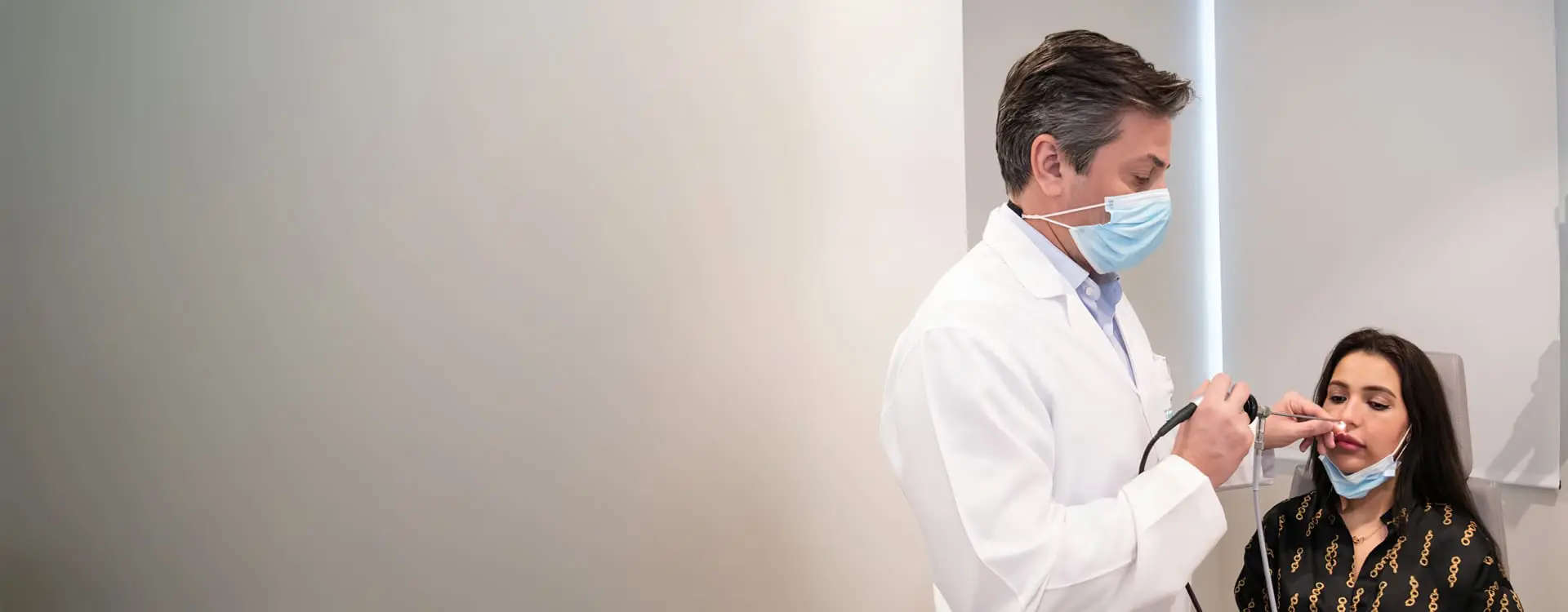
Functional Endoscopic Sinus Surgery (FESS) may be recommended when chronic sinus symptoms persist despite appropriate medical treatment. Dr. Tamer Fawzy uses a detailed ENT examination, nasal endoscopy, and imaging when needed to determine whether FESS is the most appropriate treatment.
You May Be a Candidate for FESS Surgery If You Have:
- Chronic rhinosinusitis that has not improved with appropriate medical treatment.
- Recurrent sinus infections affecting daily life.
- Nasal polyps causing persistent obstruction.
- Blocked sinus drainage confirmed by nasal endoscopy or CT imaging.
- Reduced sense of smell associated with chronic sinus disease
- Reduced sense of smell associated with chronic sinus disease

How is it done?
The Technique – Endoscopic Sinus Surgery
Using high-definition nasal endoscopes and specialized instruments, blocked sinus pathways are carefully opened to improve ventilation and drainage. Inflamed or diseased tissue is removed while preserving healthy sinus lining whenever possible. The procedure is performed entirely through the nostrils without external incisions.
Benefits of FESS Surgery
- Improved sinus drainage and ventilation.
- Reduced nasal blockage and facial pressure.
- Fewer recurrent sinus infections for some patients.
- Improved access for nasal medications and saline irrigation.
- Improvement in the sense of smell for selected patients.
- No external surgical scars.
- A less invasive approach than traditional external sinus surgery.
Recovery After FESS Surgery
Recovery after Functional Endoscopic Sinus Surgery varies according to the extent of the procedure and the patient’s individual condition. Temporary congestion is common during the early recovery period because of swelling, mucus, crusting, or dissolvable nasal packing.
Saline nasal irrigation is usually recommended to keep the nasal passages clean and support healing. Follow-up appointments allow Dr. Tamer Fawzy to monitor recovery and provide individualized postoperative guidance.
Most Patients Can Expect:
- Temporary nasal congestion during the first week.
- Light bleeding or blood-stained discharge during the early recovery period.
- Gradual improvement in breathing as swelling decreases.
- A return to light daily activities according to individual recovery and the surgeon’s advice.
- Continued internal healing over the following weeks.
- Scheduled follow-up visits to monitor healing and clear postoperative crusting when required.
Risks / Complications
Early (within 2 weeks)
- Nasal bleeding.
- Temporary congestion, pressure, or discomfort.
- Infection.
- Temporary changes in the sense of smell.
- Temporary numbness affecting the upper teeth or face in some procedures.
Rare but Serious Complications
- Injury to the eye or surrounding tissues.
- Changes in vision.
- Cerebrospinal fluid leakage.
- The need for additional treatment or surgery
Delayed / Longer-Term Considerations
Chronic sinus inflammation or nasal polyps may recur, particularly when allergies, asthma, smoking, or ongoing inflammation are not adequately controlled. Continued medical treatment and follow-up may remain necessary after surgery.
Why Choose Dr. Tamer Fawzy for FESS Surgery?
Specialist-Led Care
FESS surgery is performed by Dr. Tamer Fawzy, a German Board-certified ENT consultant with advanced training in endoscopic sinus and skull base surgery.
Precision & Preservation Philosophy
Surgery focuses on restoring sinus drainage while preserving healthy mucosa and normal anatomical structures whenever clinically possible.
Advanced Technology
High-definition endoscopic visualization and specialized instruments support precise access to affected sinus areas without external incisions.
Personalized Surgical Planning
Every procedure is planned according to the patient’s symptoms, nasal endoscopy findings, imaging results, and the extent of sinus disease. Septoplasty or another nasal procedure may be combined with FESS when clinically indicated.