


Inferior Turbinate Hypertrophy
The inferior turbinates are normal structures inside the nose that help humidify and regulate airflow. When enlarged due to chronic inflammation, allergy, or compensatory changes from a deviated septum, they can cause persistent nasal blockage, mouth breathing, snoring, and disturbed sleep.
Concha Bullosa
Concha bullosa refers to an air-filled enlargement of the middle turbinate. This anatomical variation may narrow the nasal airway or contribute to impaired sinus drainage. In some individuals, it can lead to facial pressure, headaches, or recurrent sinus infections.

Coronal CT scan view of deviated nasal septum (red arrow) to the left and right Concha bullosa (blue arrow). right eye (black arrow) left eye (yellow arrow)
Decongestant Spray Dependence
A frequently overlooked cause of nasal obstruction is dependence on topical nasal decongestant sprays such as xylometazoline or oxymetazoline (commonly marketed as Otrivin® or Afrin®). While these sprays provide rapid short-term relief, prolonged use can cause rebound congestion known as rhinitis medicamentosa. This results in worsening nasal blockage and chronic mucosal swelling.
Diagnosis
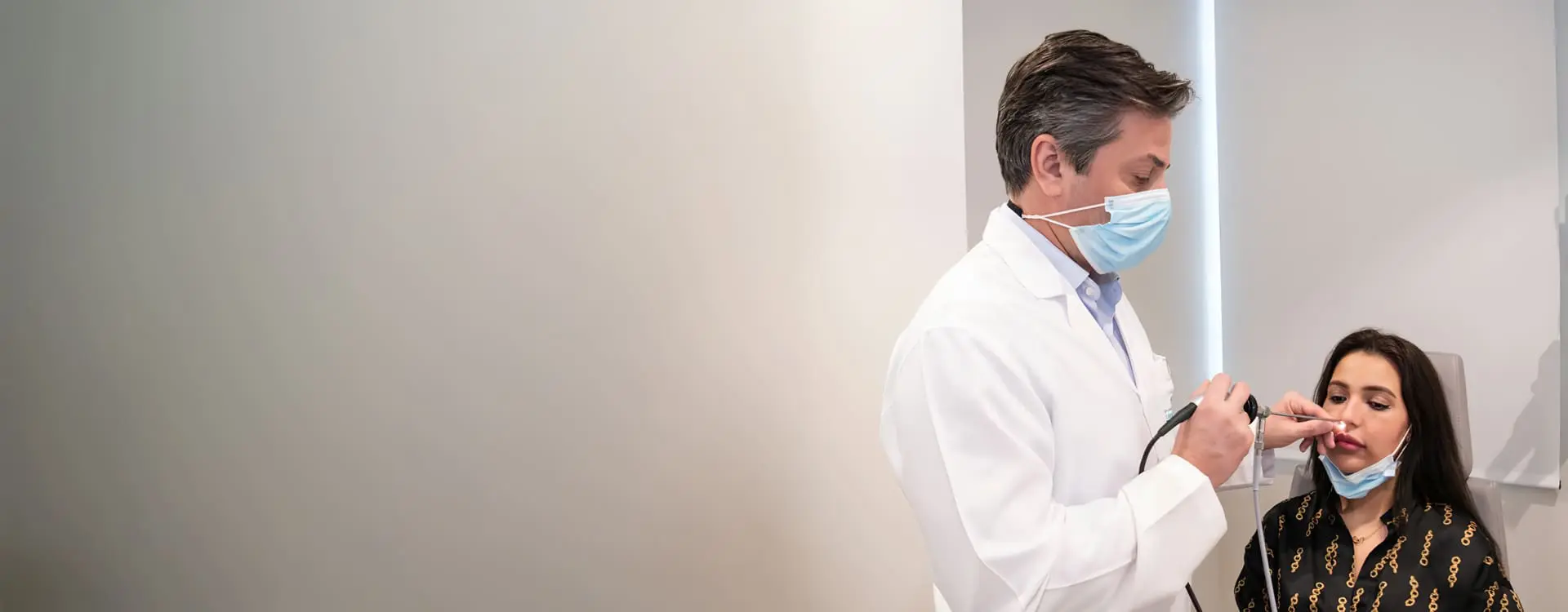
Accurate assessment includes nasal endoscopy and, in selected cases, functional testing such as rhinomanometry to objectively measure nasal airflow and resistance. Imaging studies may be required to evaluate sinus anatomy and confirm the presence of concha bullosa.
Treatment Options
Management depends on symptom severity and underlying causes. Medical treatment may include nasal steroid sprays, antihistamines, saline irrigation, and structured withdrawal from decongestant sprays. When structural obstruction significantly affects breathing or quality of life, surgical procedures such as turbinate reduction or endoscopic correction of concha bullosa may be recommended.
Early specialist evaluation allows personalised treatment planning aimed at restoring comfortable nasal breathing and improving sleep quality.
Who is a Candidate for Turbinate Reduction?
Turbinate Reduction is recommended for patients whose Nasal Obstruction is caused by Enlarged Turbinates and has not improved with appropriate medical treatment. When the inferior turbinates remain enlarged despite nasal sprays, allergy management, or other medications, they can significantly reduce airflow and lead to persistent Blocked Nose, Chronic Nasal Congestion, and ongoing Nasal Breathing Problems.
As an experienced ENT Surgeon Dubai, Dr. Tamer Fawzy performs a comprehensive evaluation using nasal endoscopy and, when necessary, imaging studies to determine the underlying cause of Nasal Airway Obstruction. Treatment is always tailored to the patient’s condition, and surgery is recommended only when conservative treatments no longer provide sufficient relief.
You may be a suitable candidate if you have:
- Persistent Inferior Turbinate Hypertrophy causing long-term Nasal Obstruction.
- Enlarged Turbinates that do not respond to medical therapy.
- Ongoing Blocked Nose affecting breathing during the day or night.
- Chronic Nasal Congestion interfering with sleep or daily activities.
- Nasal Breathing Problems caused by structural narrowing inside the nose.
- Concha Bullosa contributing to reduced nasal airflow or impaired sinus drainage.
- A need for Turbinate Surgery as part of a comprehensive treatment plan to improve nasal airflow while preserving turbinate function. .
Benefits of Turbinate Reduction
Turbinate Reduction is a functional procedure designed to improve nasal airflow while preserving the important role of the turbinates in filtering, warming, and humidifying inhaled air. The goal is to relieve obstruction without removing more tissue than necessary.
Potential benefits of Turbinate Reduction include:
- Improved Nasal Breathing Problems during daily activities and sleep.
- Reduced mouth breathing and improved sleep comfort in selected patients.
- Improved airflow through the nasal passages while preserving normal nasal function.
- Long-term relief from Nasal Airway Obstruction in appropriately selected patients.
- The ability to combine treatment with other functional nasal procedures when clinically indicated.
- Improved nasal airflow and easier breathing through the nose.
Every patient is different, and the expected outcome depends on the underlying cause of the obstruction and any associated nasal conditions identified during your assessment.
Recovery After Turbinate Reduction
Immediately After Surgery
Following Turbinate Surgery, mild nasal congestion, temporary swelling, and light blood-stained nasal discharge are common during the first few days. These symptoms gradually improve as the nasal tissues heal.
The First Week
Saline nasal irrigation is usually recommended to keep the nasal passages clean and reduce crust formation. Most patients notice progressive improvement in breathing as swelling decreases during the first week after surgery.
Returning to Daily Activities
Many patients are able to return to office-based work and light daily activities within a few days, although recovery varies depending on whether Turbinate Reduction is performed alone or combined with other nasal procedures. Strenuous exercise should be avoided until approved by your surgeon.
Long-Term Healing
Complete Turbinate Reduction Recovery continues over several weeks as the nasal tissues fully heal. Regular follow-up appointments allow Dr. Tamer Fawzy to monitor healing, optimize recovery, and ensure the best possible long-term improvement in nasal airflow.