


Deviated Septum: Symptoms, Diagnosis, and Septoplasty Surgery
The nasal septum is the wall of cartilage and bone that separates the two nasal passages. Ideally, it sits in the center of the nose, allowing equal airflow through both sides.
When the septum is significantly displaced to one side, it can block airflow and lead to breathing difficulties, sinus infections, and other nasal symptoms.
Many people have a mild septal deviation, but when symptoms become persistent, evaluation by an ENT specialist may be necessary.
What Is the Nasal Septum?
The nasal septum is a structure made of cartilage and bone that divides the nose into two separate passages.
It helps regulate airflow, supports the structure of the nose, and directs air toward the sinuses and olfactory region.
When the septum becomes crooked or displaced, it can narrow one or both nasal passages and interfere with normal airflow.
What Causes a Deviated Septum?
A deviated septum may develop for several reasons.
Common causes include:
- Congenital deviation present from birth
- Injury or trauma to the nose
- Growth-related changes during adolescence
- Previous nasal fractures / sports injuries
- Structural variations of nasal anatomy
In some patients, the deviation becomes more noticeable over time as nasal structures change.
Common Symptoms of a Deviated Septum
Symptoms vary depending on the severity of the deviation.
Common symptoms include:
Difficulty breathing through the nose
Nasal blockage, often worse on one side
Frequent sinus infections
Postnasal drip
Facial pressure
Snoring or sleep disturbance
Nosebleeds
Headaches
Some patients may also develop chronic sinusitis due to impaired sinus drainage.
How a Deviated Septum Is Diagnosed
Diagnosis usually involves evaluation by an ENT specialist.
Assessment may include:
- Medical history and symptom review
- Nasal examination
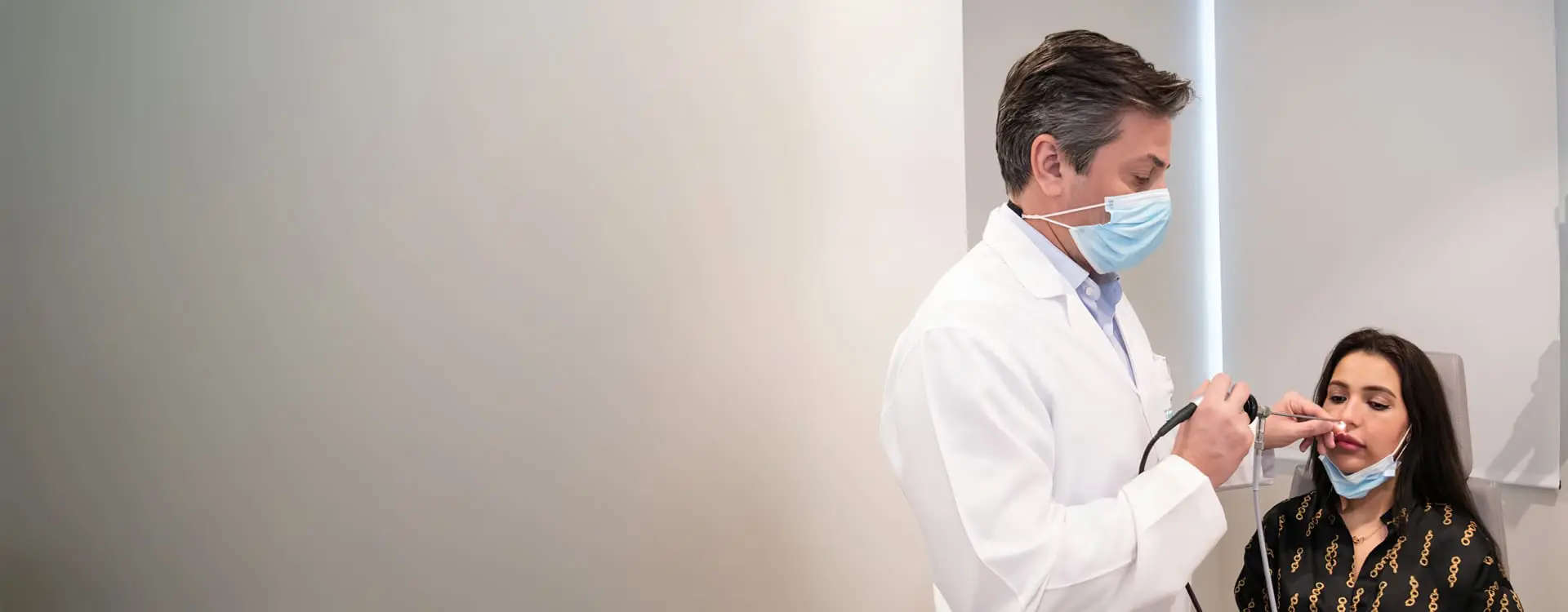
- Nasal endoscopy to visualize internal nasal structures
- CT scan of the sinuses in selected cases
These examinations help determine the severity of the deviation and whether other conditions, such as nasal polyps or sinus disease, are present.

Nasal endoscopy view of a deviated nasal septum to the right touching the inferior turbinate

CT scan : showing deviated nasal septum to the right touching the inferior turbinate.
Medical Treatment Options
For mild symptoms, medical therapy may help reduce nasal inflammation and improve airflow.
Common treatments include:
- Nasal corticosteroid sprays
- Saline nasal irrigation
- Allergy management
- Decongestants when appropriate
While these treatments can improve symptoms, they do not correct the underlying structural deviation.
Septoplasty Surgery
Septoplasty is a surgical procedure designed to straighten the nasal septum and improve airflow.
The procedure is performed entirely through the nostrils, with no external incisions.
During surgery, the surgeon reshapes or repositions the cartilage and bone to create a more central septum and wider nasal airway.
Septoplasty may be performed alone or combined with other procedures such as turbinate reduction or sinus surgery when necessary.

Benefits of Septoplasty
Septoplasty can provide significant improvement in nasal breathing and overall nasal function.
Benefits may include:
- Improved airflow through the nose
- Reduced nasal obstruction
- Fewer sinus infections
- Better sleep quality
- Reduced snoring
- Improved exercise tolerance
Recovery After Septoplasty
Recovery after septoplasty is usually straightforward.
Most patients experience mild congestion and swelling for a short period after surgery. Normal activities can often be resumed within a few days, although strenuous activities should be avoided during the early recovery period.
Your surgeon will provide specific postoperative instructions to ensure optimal healing.
When Should You See a Specialist?
You should consider seeing an ENT specialist if you experience:
- Persistent nasal obstruction
- Difficulty breathing through the nose
- Recurrent sinus infections
- Frequent nosebleeds
- Snoring or sleep problems related to nasal blockage
Early evaluation helps determine whether symptoms are caused by a deviated septum or another nasal condition.
Expert Rhinology Care
At Dr. Tamer Fawzy’s Rhinology Clinic, patients with nasal obstruction receive comprehensive evaluation and individualized treatment plans.
Management may include medical therapy, septoplasty surgery, or treatment of associated conditions such as sinusitis or nasal polyps.
The goal is to restore healthy nasal airflow and improve overall quality of life.