

About


For Patients

Nose & Sinus Surgery

Ears & Hearing Procedures

Throat & Voice Procedures

Advanced Procedures

Sleep Surgery

Multi Omics Sleep Optimization

Pediatric Hearing

Tonsillitis & Adenoiditis Treatment
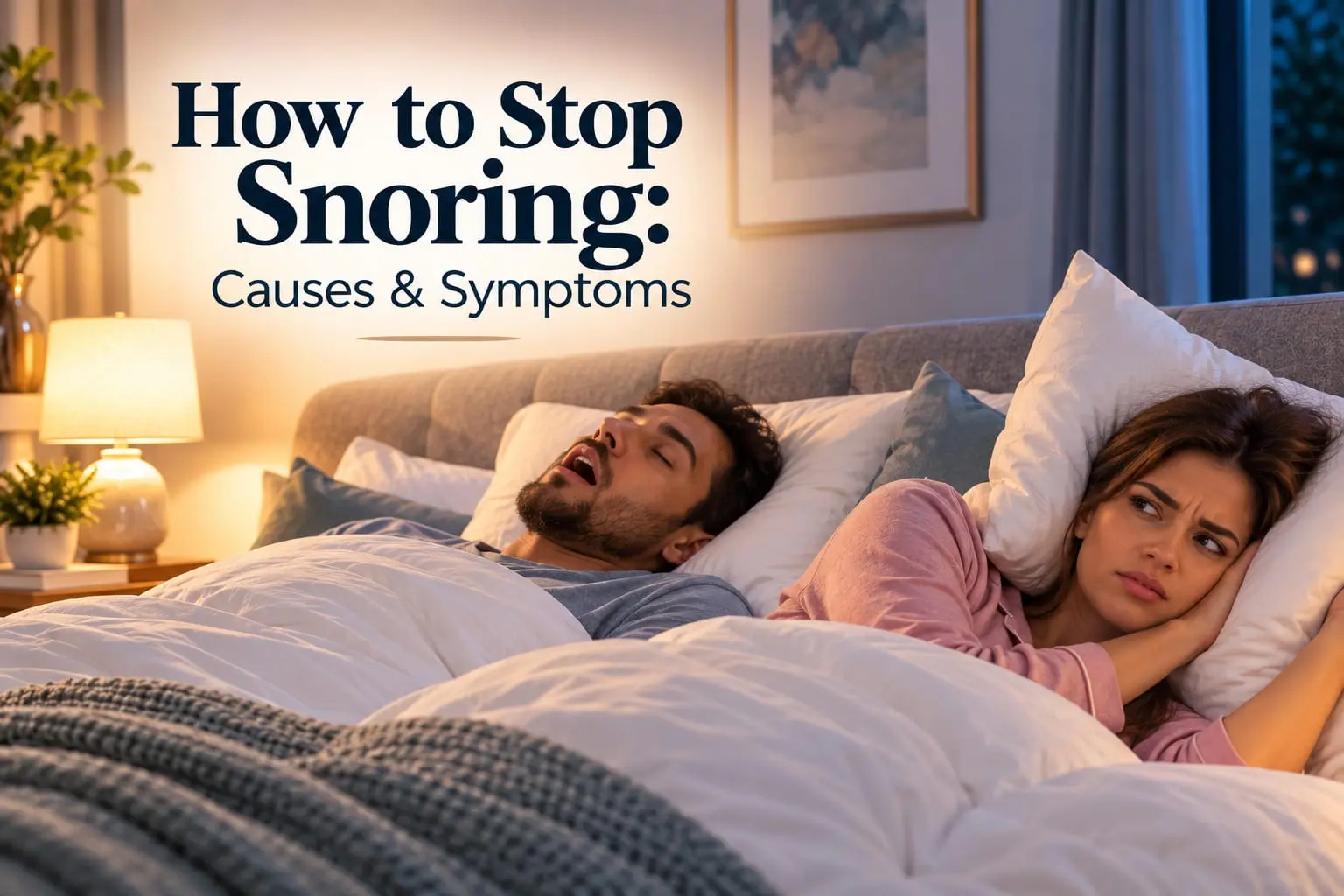
How to Stop Snoring: Causes & Symptoms
Introduction
Does your partner complain about your snoring? Or do you wake up with a dry mouth, a sore throat, or the feeling that you did not sleep well? Snoring is common, and occasional snoring is usually not a cause for concern. However, loud or persistent snoring can sometimes point to a problem affecting the nose, throat, or upper airway.
Snoring happens when airflow is partly blocked during sleep, causing relaxed tissues in the airway to vibrate. In some cases, it can also be associated with obstructive sleep apnea, a condition that causes repeated interruptions in breathing during sleep.
The good news is that you do not always have to live with it. Understanding why you snore is the first step toward finding the right way to stop snoring.
What Is Snoring?
Snoring is the rough or noisy sound produced when air moves through a narrowed upper airway during sleep. When the muscles and tissues of the throat relax, the airway may become narrower. As air passes through this smaller space, the surrounding tissues can vibrate and produce the familiar sound.
The degree of narrowing can vary from person to person. Nasal blockage, the shape of the nose and throat, enlarged tonsils, excess tissue, sleeping position, and other factors can all affect airflow.
While simple snoring may not always indicate a serious problem, frequent or very loud snoring deserves attention, especially if it is accompanied by other symptoms.
What Causes Snoring?
There is rarely just one reason why someone snores. Common snoring causes include:
- Nasal congestion: A blocked nose can make it harder to breathe normally during sleep.
- Deviated septum: A crooked nasal septum can restrict airflow through the nose.
- Enlarged tonsils or adenoids: Enlarged tissues can narrow the airway, particularly in children.
- Sleeping position: Sleeping on your back may allow the tongue and soft tissues to move backward and partially block the airway.
- Excess weight: Extra tissue around the neck can contribute to airway narrowing.
- Alcohol and sedatives: These can relax the muscles of the upper airway and make snoring more likely.
- Anatomical factors: The structure of the nose, jaw, tongue, soft palate, and throat can affect airflow.
- Sleep apnea: Snoring can be one of the most noticeable symptoms of obstructive sleep apnea.
Because the causes are different, the most effective solution depends on identifying what is actually causing the airway to narrow.
How to Stop Snoring:
So, how to stop snoring? The answer depends on the reason behind it, but several changes may help reduce snoring.
– Try sleeping on your side instead of your back, as this may help keep the upper airway more open. Maintaining a healthy weight can also improve airflow in people whose snoring is related to excess weight.
– Avoid alcohol close to bedtime, particularly if you notice that your snoring becomes worse after drinking. It is also important to treat ongoing nasal congestion rather than simply putting up with a blocked nose every night.
– Improving your overall sleep habits may help as well. A regular sleep schedule and adequate sleep can support healthier sleep patterns.
If these measures do not help, an ENT assessment can determine whether nasal obstruction, enlarged tissues, or another structural problem is contributing to the snoring.
How to Stop Snoring Naturally:
If you are looking for how to stop snoring naturally, start with simple changes that do not involve medication or surgery.
Changing your sleeping position is one of the easiest steps to try. Keeping the nasal passages clear, managing allergies, staying physically active, maintaining a healthy weight, and avoiding alcohol before bedtime may also help some people.
Good sleep habits are important too. Try to maintain regular sleeping hours and make sure your bedroom is comfortable and suitable for sleep.
However, natural approaches are not a universal cure. If your snoring is caused by a deviated septum, enlarged tonsils, significant nasal obstruction, or sleep apnea, lifestyle changes alone may not be enough. In these cases, treating the underlying problem is more likely to provide lasting improvement.
How to Stop Snoring Immediately:
If you are searching for how to stop snoring immediately, it is important to set realistic expectations. There is no guaranteed method that will stop snoring instantly in every person because snoring can have many different causes.
On a particular night, you may be able to reduce snoring by changing from your back to your side, clearing nasal congestion, avoiding alcohol, and making sure your head and neck are positioned comfortably.
These steps may reduce the noise temporarily, but they do not necessarily treat the reason you snore. If snoring happens regularly, finding and treating the underlying cause is a better long-term approach.
Is Snoring a Sign of Sleep Apnea?
Snoring does not always mean that you have sleep apnea. Many people snore without having significant breathing interruptions. However, loud and persistent snoring can be a warning sign of obstructive sleep apnea.
Pay particular attention if someone notices that you stop breathing during sleep or if you wake up gasping or choking. Excessive daytime sleepiness, morning headaches, difficulty concentrating, and waking up feeling unrefreshed can also occur.
Sleep apnea causes repeated interruptions in breathing and can affect sleep quality and overall health when left untreated. If these symptoms are present, medical evaluation is important.
When Should You See a Doctor About Snoring?
Occasional snoring may not require medical attention. But it is worth speaking with a doctor if your snoring is persistent, very loud, or getting worse.
An evaluation is particularly important if you have:
- Witnessed pauses in breathing during sleep.
- Gasping or choking at night.
- Excessive daytime sleepiness.
- Poor or unrefreshing sleep.
- Morning headaches.
- Persistent nasal blockage.
- Snoring that regularly disrupts your partner’s sleep.
An ENT specialist can examine the nose and throat and look for problems that may be affecting airflow. Depending on your symptoms, further assessment for sleep apnea may also be recommended.
How Is Snoring Treated?
The right snoring treatment depends on its cause and whether sleep apnea is present.
– If nasal obstruction is contributing to the problem, treatment may focus on conditions such as chronic nasal congestion, allergies, a deviated septum, or nasal polyps. Treating these problems may improve nasal airflow and reduce snoring.
– For some patients, oral appliances can help keep the airway open during sleep. When snoring is associated with obstructive sleep apnea, CPAP therapy may be recommended to prevent the airway from repeatedly collapsing.
– Surgery may also be considered for selected patients when a structural problem is contributing significantly to airway obstruction. The specific procedure depends on the patient’s anatomy and the underlying cause.
– For patients with persistent snoring, an individualized assessment is therefore more useful than relying on generic anti snoring products or quick fixes.
Dr. Tamer Fawzy, Consultant ENT Surgeon at Al Zahra Hospital Dubai and Professor at Fayoum University, has more than 20 years of international clinical and academic experience. His extensive experience in nasal and sinus surgery, including more than 1,200 endoscopic nasal and extended sinus procedures, allows for detailed assessment of nasal and upper-airway conditions that may contribute to breathing difficulties during sleep.
Ultimately,
Learning how to stop snoring while sleeping starts with understanding why the snoring is happening in the first place. Simple lifestyle changes may be enough for some people, while others need treatment for an underlying nasal, throat, or sleep-related condition. If snoring is loud, persistent, or accompanied by breathing pauses or daytime sleepiness, an ENT evaluation can help you find the right solution.
Frequently Asked Questions About Snoring:
1. How can I stop snoring?
To stop snoring, it is important to identify what is causing it. Sleeping on your side, maintaining a healthy weight, avoiding alcohol before bedtime, and treating nasal congestion may reduce snoring in some people. If snoring is persistent or accompanied by breathing pauses, an ENT evaluation can help identify whether a nasal, throat, or sleep-related condition needs treatment.
2. Can you stop snoring immediately?
There is no guaranteed way to stop snoring immediately because the cause varies from person to person. Changing your sleeping position, clearing nasal congestion, and avoiding alcohol before bedtime may reduce snoring on a particular night. However, persistent snoring usually requires identifying and addressing the underlying cause for long-term improvement.
3. Why do I snore while sleeping?
You snore while sleeping when airflow through the nose or throat becomes partially restricted, causing relaxed tissues in the upper airway to vibrate. Nasal congestion, a deviated septum, enlarged tonsils, excess weight, alcohol, sleeping on your back, and certain anatomical features can all contribute to snoring. In some cases, snoring is also associated with obstructive sleep apnea.
4. Is snoring a sign of sleep apnea?
Snoring can be a sign of obstructive sleep apnea, but not everyone who snores has sleep apnea. Loud, persistent snoring is more concerning when it occurs with pauses in breathing, gasping or choking during sleep, excessive daytime sleepiness, morning headaches, or waking up feeling unrefreshed. If these symptoms occur together, medical evaluation is recommended.
5. When should I see a doctor about snoring?
You should see a doctor if your snoring is persistent, very loud, or regularly affects your sleep or your partner’s sleep. An evaluation is especially important if you have witnessed pauses in breathing, gasping or choking at night, excessive daytime sleepiness, morning headaches, or persistent nasal blockage. These symptoms may indicate an underlying airway problem or sleep apnea.
6. Can a deviated septum cause snoring?
Yes. A deviated septum can narrow one or both nasal passages and make it harder to breathe through the nose, particularly during sleep. This may contribute to mouth breathing and snoring. If nasal obstruction is significant or persistent, an ENT specialist can assess the septum and determine whether medical or surgical treatment may improve nasal airflow.



Patient Reviews


Verified Patient
17 / 01 / 2022 Nisar Ahammad MK
11 / 04 / 2026 Verified Patient
08 / 01 / 2022 Verified Patient
06 / 02 / 2022 Verified Patient
21 / 01 / 2022

Affiliations